
THE CHALLENGE
Utilizing abatement units is not just about increasing production for Fredman Bag’s president, Tim Fredman Jr. Recent expansions have had his company making major investments in their air pollution control equipment not only to meet Environmental Protection Agency (EPA) regulations, but also to keep their reputation as a good neighbor.
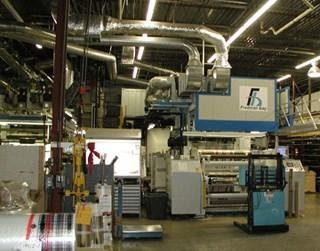
Fredman Bag purchased a new, eight-color, gearless CI-flexo press from Uteco Converting to adapt to their customers’ growing needs, by enhancing their product offering and delivery capabilities. The gearless press runs at faster speeds with a higher resolution, printing a superior-quality product and increasing production by nearly 40%.
The volatile organic compounds (VOCs) and hazardous air pollutants (HAPs) emitted by a printing press are not only harmful to the environment but also people. Fredman Bag had been using an Anguil 6,000 SCFM (9,630 Nm3/hr) catalytic oxidizer as an effective means of air pollution control before their expansion. With the increase in emissions and flow from the new press, the existing 10-year old oxidizer could no longer keep up. After serious consideration, Fredman Bag turned to Anguil Environmental Systems again to address their pollution control needs.
THE SOLUTION
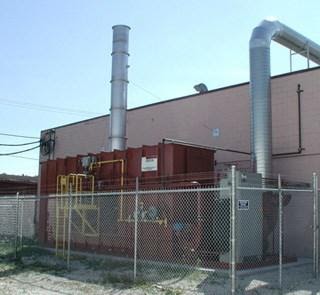
Anguil’s application-specific engineering stressing air volume reduction, energy-efficiency and improved emissions capture provided an affordable and flexible solution. Taking into consideration future growth, a 12,000 SCFM (19,260 Nm3/hr) regenerative thermal oxidizer (RTO) was selected to ensure current and future regulatory compliance.
The Anguil two-chamber RTO heats exhaust air from the printing presses as it passes through beds of ceramic media located in an energy recovery chamber. The process air moves from the recovery chamber toward the combustion chamber, where the VOCs are oxidized, releasing energy into the second energy recovery chamber. A diverter valve switches the airflow direction so both energy recovery beds alternately store and release energy to minimize operating costs by reducing any auxiliary fuel requirement. This system is designed for heat recovery of over 95% and is self-sustaining, requiring little auxiliary fuel even with low VOC loadings.
This energy-efficient recovery means the Anguil RTO offers lower operating costs over other emission treatment methods. As a result of Fredman Brag’s decision to use the energy-efficient Anguil oxidizer, the company was eligible for Wisconsin Energy’s Focus on Energy program. The incentives they received allowed them to go ahead with the project sooner than they had initially hoped.
THE RESULT
Lost production was another concern for Tim Fredman, Jr. Anguil took careful measures to ensure that there were no disruptions in Fredman Bag’s process. By utilizing existing ductwork, preparing accordingly, and coordinating with the customer, Anguil was able to install the complete system in under three days. The oxidizer was delivered to Fredman Bag on a Thursday during a scheduled maintenance shutdown. Installation was complete by Saturday, and start-up was done that same day. This rapid and well-prepared installation saved the converter from any costly downtime.
The Anguil system can be monitored and controlled remotely 24/7 for ease of troubleshooting and adjustments. This new remote access eliminates unnecessary service calls. The unit has a high volumetric turndown capacity to minimize operating costs during process idle, downtime, or on weekends. The Anguil oxidizer has been operating maintenance-free at a 99% destruction rate efficiency since start-up. A trouble-free air pollution control system allows Tim Fredman Jr. to concentrate on production and sales, knowing his company complies with environmental regulations.