
THE CHALLENGE
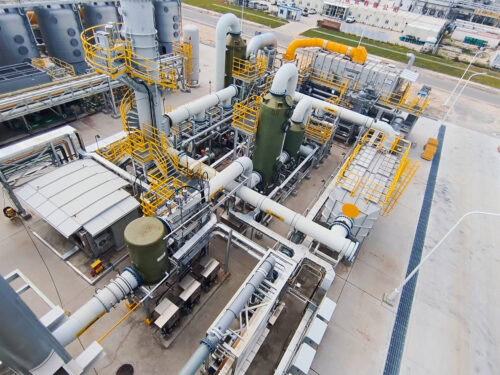 In the highly competitive field of chemical engineering, environmental protection and sustainable development have become the key indicators for measuring the success of projects. A world – leading chemical company, with a vision for the future and a commitment to environmental stewardship, launched a major integrated Refining and Chemical Project in China. As an essential supporting utility of this grand project, the waste water treatment plant faced a significant challenge: finding a reliable solution provider with extensive international experience in treating the complex waste gas sources generated by the plant.
The waste gas emitted from the plant presented a complex and challenging situation. It originated from two distinct sources. One source was the waste water exhaust, which had a relatively low concentration of pollutants but a high flow rate of 20,000 Nm³/h. The other source was the process exhaust from the client’s production line, characterized by high – concentration pollutants yet a low flow rate of 100 Nm³/h. The main VOC pollutants in these waste gases were a mixture of harmful substances, including Formaldehyde, Benzene, Toluene, Xylene, H₂S, NH₃, and others.
The client, being a top-class global company, had extremely high and stringent requirements across all aspects of the project. From the strict adherence to international standards and codes, meticulous control over fabrication processes, careful selection of coupled materials, to on – site management and quality control, every detail was closely scrutinized. The documentation work was also a massive task, with project progress and related documents needing to be updated on a weekly basis. This comprehensive set of demands made the selection of a suitable solution provider a difficult decision.
After a rigorous process of comparing various potential partners, the client finally selected Anguil Asia. Headquartered in U.S. for over 40 years, Anguil Asia has the advanced and reliable technologies in the VOC abatement industry, a high reputation and world-class services.
Its strong international background and the impressive track record of successful installations in similar applications aligns with the client’s expectation for a supplier. The client believed that Anguil Asia had the expertise and capabilities to meet their high – level requirements and solve the complex waste gas treatment problem.
THE SOLUTION
To address the unique characteristics of the waste gas and meet the client’s strict requirements, Anguil Asia proposed a comprehensive and innovative solution: an RTO (Regenerative Thermal Oxidizer) system incorporated with scrubbers.
RTO, or Regenerative Thermal Oxidizer, is a highly efficient waste gas treatment technology widely adopted in various industrial sectors. It consists of a combustion chamber and two or more regenerative chambers filled with ceramic media. Within the combustion chamber, waste gas with VOC pollutants is heated to 750 – 950°C, decomposing VOCs into CO₂ and water, and simultaneously releasing heat energy. The Ceramic materials in the regenerative chambers can alternately absorb a large amount of heat from the hot outgoing gas and then release this heat to pre – heat the incoming cold exhaust gas in the subsequent process, improving the thermal efficiency of the RTO.
In order to maintain optimum heat recovery efficiency of the regenerative chamber, the waste gas flow direction is switched at regular intervals by the automatic diverter valves on demand from the DCS control system. This periodic flow direction shift provides a uniform temperature distribution throughout the entire oxidizer.
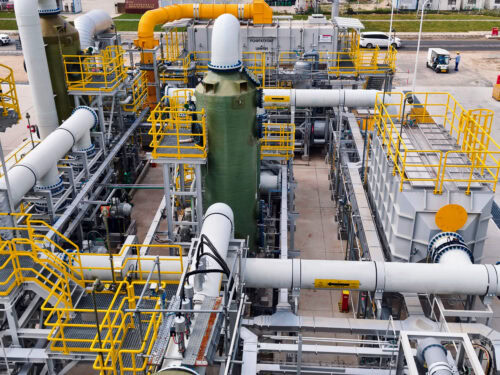 Specifically, Anguil Asia recommended a 3 – chamber RTO system, which offers higher destruction efficiency compared to a 2-chamber system, and it was coupled with one set of pre – scrubber, a quench device, and one set of Alkali Scrubber. Additionally, a set of emergency Activated Carbon system was included to ensure maximum safety and reliability.
Fully understanding the client’s high-standard demands and committed to close cooperation in all aspects, Anguil Asia implemented strict quality control measures at every production stage in manufacturing, ensuring that each component used in the waste gas treatment system met the required standards. The materials selected were of excellent quality, sourced from reliable suppliers known for their durability and performance in industrial applications. Regarding quality management, the company had a comprehensive inspection process to eliminate any potential defects. On – site management was also a key focus. The installation and commissioning team on – site worked in tandem with a well – organized overall team, ensuring smooth operations, efficient resource allocation, and strict compliance with safety regulations.
In terms of documentation, a dedicated team is established to handle the massive amount of paperwork. They ensured that all project progress reports and related documents were accurately updated and submitted on time every week, maintaining a high level of transparency and communication with the client.
Safety was a top priority in this project. The RTO is incorporated with a hot gas bypass system. When the pollutants concentration was high, part of the gases could be bypassed from the RTO combustion chamber, effectively preventing potential over – temperature or explosion risks and ensuring the safety of the RTO system. Additionally, the emergency Activated Carbon system was crucial. In case the RTO was out of work or malfunctioned, the waste gas could be emergently diverted through this system to the stack, eliminating the risk of explosion caused by the accumulation and expansion of waste gas within the oxidizer.
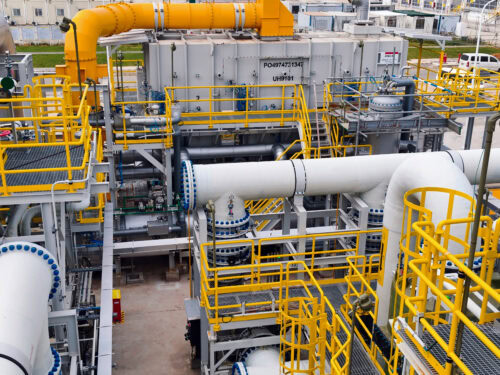 Given that the waste gas contained corrosive substances, Anguil Asia took multiple precautions. Before the waste gas entered the RTO, a pre – scrubber was installed to effectively remove acid substances such as H₂S. After the RTO process, to eliminate the SO₂ generated during combustion, an Alkali Scrubber, along with a quench, was incorporated. Moreover, considering the high salt fog environment near the sea where the RTO system was located, which posed another source of corrosion, Anguil Asia made strategic material choices and treatments. For instance, the pipeline and bolts were made of PTFE (Polytetrafluoroethylene), a highly corrosion – resistant material. In high – temperature areas, ceramic fasteners were used to ensure stability and durability. The paint film for the oxidizer was applied with a much thicker layer than normal to enhance its anti – corrosion properties.
To meet the high requirements for the oxidizer’s strength and sealing performance, Anguil Asia deviated from the normal practice. When welding the oxidizer reinforce rib, instead of using intermittent welding, a complete welding process was adopted. This meticulous approach significantly enhanced the structural integrity and sealing of the oxidizer, ensuring its long – term stable operation under harsh conditions.
THE RESULT
With the implementation of a well-designed and carefully executed solution, the RTO system is expected to achieve outstanding results. It is projected to fully meet the client’s strict requirements, ensuring VOC emissions adhere to both national and industry standards. This success showcases Anguil Asia’s technical and project management skills, while also promoting the client’s sustainable development.