


 OXIDIZER SERVICE SERIES: PART 3
At the risk of sounding repetitive, the same opening as Part 2 of our Oxidizer Service Series – Crafting Your Oxidizer Maintenance Plan also applies to stocking spare parts for your oxidizer system.
Many will come to this article hoping for a one-size-fits-all list for stocking spare parts for an oxidizer system. As a company that provides service for any oxidizer regardless of style or original manufacturer, we at Anguil have long wanted the same. A standardized list would certainly make life easier.
Our best recommendation for building a Spare Parts Program is as follows:
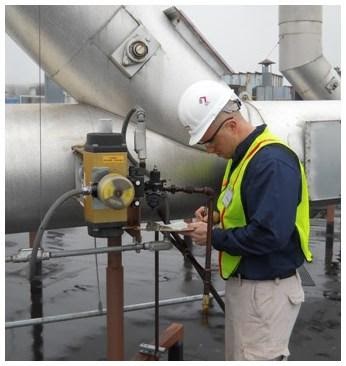
- From the documentation as listed in Part 1 of our Oxidizer Service Series – Better Maintenance Starts with Better Documentation, gather your P&ID and updated Electrical Schematics, including panel layout diagrams.
- Compile a list of your Permit Requirements, especially relating to allowable downtime each year and bypass tolerance.
- Meet with an oxidizer service provider, such as Anguil. Using the P&ID and control panel diagrams as a guide, tag each system component into one of four categories: CRITICAL, RECOMMENDED, CONVENIENCE, and ORDER AS NEEDED.
- Share the tagged diagrams with your maintenance personnel and get their feedback on whether their experiences support this categorization.
- Once the parts have been prioritized, they can be priced and purchased according to the needs of your facility. Keep in mind that many oxidizer manufacturers have OEM discounts with oxidizer component providers so they can be competitive on providing parts for your system.
- Inventory your stock once parts are purchased and on your shelves. We recommend incorporating this into your regular maintenance routine.
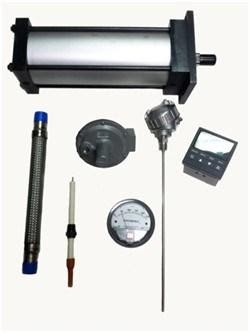
 Why does your Oxidizer Spare Parts Program deserve significant attention?
 Why does your Oxidizer Spare Parts Program deserve significant attention?
Consider the following:
DOWNTIME
As reliable as modern oxidizer systems can be, issues will arise with any industrial equipment. Downtime can be dramatically reduced if the right parts are available on site. What is it worth to your company if you can look back over a year and say that downtime was cut in half – or even more?
COMPLIANCE
Chances are that wording very similar to the following may already be in your environmental permit: “OPERATOR will stock the recommended spare parts as determined by MANUFACTURER.” This type of wording is being added to safety regulations governing the design and operation of oxidizer systems. Stocking appropriate levels of spare parts for your oxidizer system may be a compliance concern for your site.
DEFENSIBILITY
As mentioned earlier, problems will happen. When they do, you want to be in good partnership with your local regulatory agency. Regulators across the country are getting both tougher and smarter. If you ask for leniency in an emergency downtime situation but cannot demonstrate you’ve taken steps to stock the parts recommended by your system’s manufacturer, you may be seen as uncooperative.
PREPAREDNESS
Choosing to have a well-stocked spare parts inventory is comparable to having adequate automotive, home, or life insurance in place. Keeping the necessary components available on hand to get your system back running in a minimum amount of time is crucial. There is no lengthy downtime, lost production revenue, or plant headache due to not having the proper “insurance” in place. After all, having a stockroom full of “unused” spare parts is like having purchased several “unused” insurance policies. It is always better to have the appropriate insurance in place should it be needed.
MISSION
Anyone that owns and operates an oxidizer system has already made both a significant investment in, and a long-term commitment to, environmental compliance. Stocking an appropriate level of spare parts for your system is just one part of that same long-term commitment.
Operating Context Matters
Although we stress the importance of a well-designed thermal and catalytic oxidizers, we also consider a well-organized spare parts program crucial. As manufacturers of these systems, we take pride in the reliability of the oxidizers we build and fully expect years of trouble-free operation. As much as we want to sell spare parts packages with every oxidizer system, continuously harping on the need for a large contingent of spare parts can seem counterintuitive at times. Designing a recommended spare parts program for a particular customer can be tricky and, unfortunately, also often gets less thought than it deserves. However, there is a specific operating context that can guide the proper approach to your oxidizer spare parts plan.
Several years ago, while presenting our final proposal for an oxidizer system to a potential customer, we included a recommended spare parts package valued at approximately $20,000.00. The prospective customer was mildly put off by this number. The retort at the time was, “You mean for the amount I am spending on this equipment, I have to buy $20,000.00 worth of parts just to make sure it runs right?”
Later that same week, we attended a pre-bid meeting for another potential customer. During the review of the bid specifications, the presenter stated, “As part of your bid package for this system, we would like to see your recommended spare parts list. Fair warning, anyone that turns in a package less than $20,000.00 will get scoffed at. That would indicate you don’t understand our production situation.”
In one week we met two different potential customers, both somewhat offended by a $20,000.00 recommended spare parts package, albeit for different reasons. The kicker? Both potential customers were considering the very same model of RTO!
Happily, both potential customers did become customers. Although seemingly at odds with one another’s thinking, neither customer was technically wrong in their comments on the bid package. The first customer was not only allowed to be turned off for several months of the year but also permitted oxidizer downtime of up to ten days during the run season. The second customer was located in a non-attainment zone and only allowed up to four hours to finish a current production batch upon an oxidizer upset. At that point, all production had to stop until the oxidizer was running again.
Even though the model of oxidizer system was the same, the approach to developing a customized spare parts plan was completely different for these customers — and very permit-driven.
At Anguil, we are eager to help you in the mission of designing an Oxidizer Spare Parts Plan that is right-sized for your operating context.
This is the third of four parts in Anguil’s Oxidizer Service Series. We encourage you to also view Part 1: Better Maintenance Starts With Better Documentation as well as Part 2: Crafting Your Oxidizer Maintenance Plan and Part 4: Oxidizer System Optimization.